


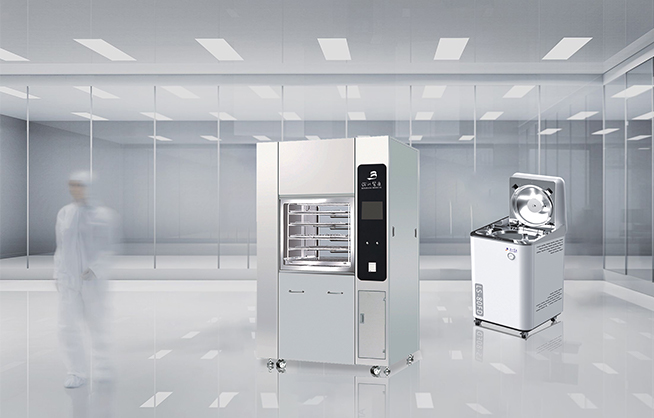

Monitoring the Sterilization Efficacy of High-Pressure Steam Sterilizers
Közzétette Adminisztrátor | 30 Jun
For years, grassroots healthcare facilities have used small steam sterilizers for disinfection, but there has been no effective monitoring method or evaluation standard for sterilization efficacy. The quality of disinfection and sterilization for medical supplies at grassroots facilities has long been a source of difficulty for infection-control staff.
What indicators should be used to evaluate or monitor the sterilization efficacy of a pressure steam sterilizer (autoclave), how often should monitoring occur, and how exactly should it be done?
The national standard GB/T 30690-2014, "Monitoring Methods and Evaluation Requirements for Sterilization Efficacy of Small Steam Sterilizers," completes the disinfection and hygiene standard system, resolving the question of monitoring methods and evaluation requirements for small steam sterilizers.

01 Small Steam Sterilizers
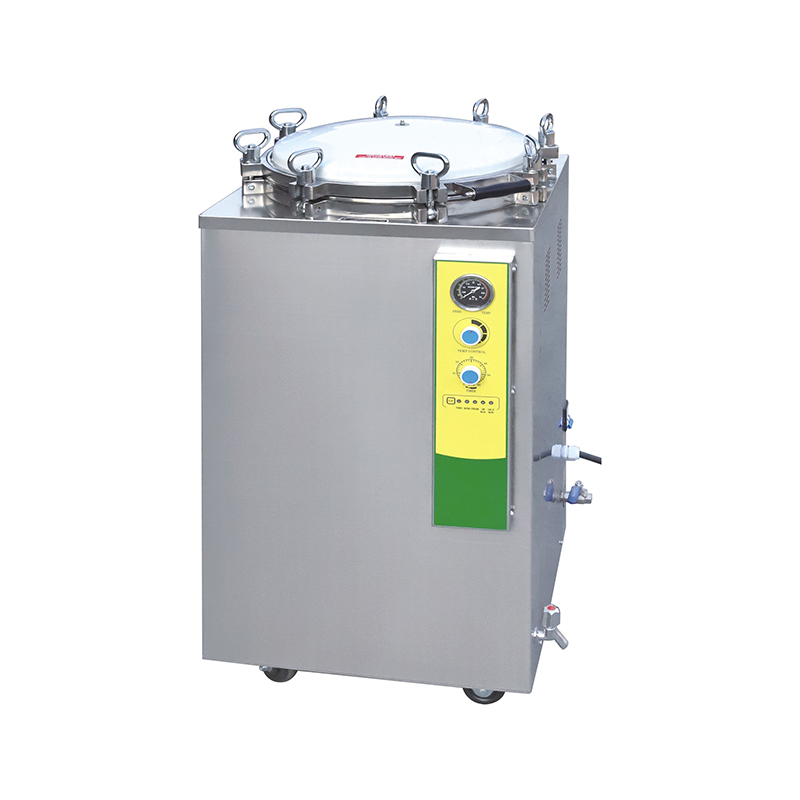
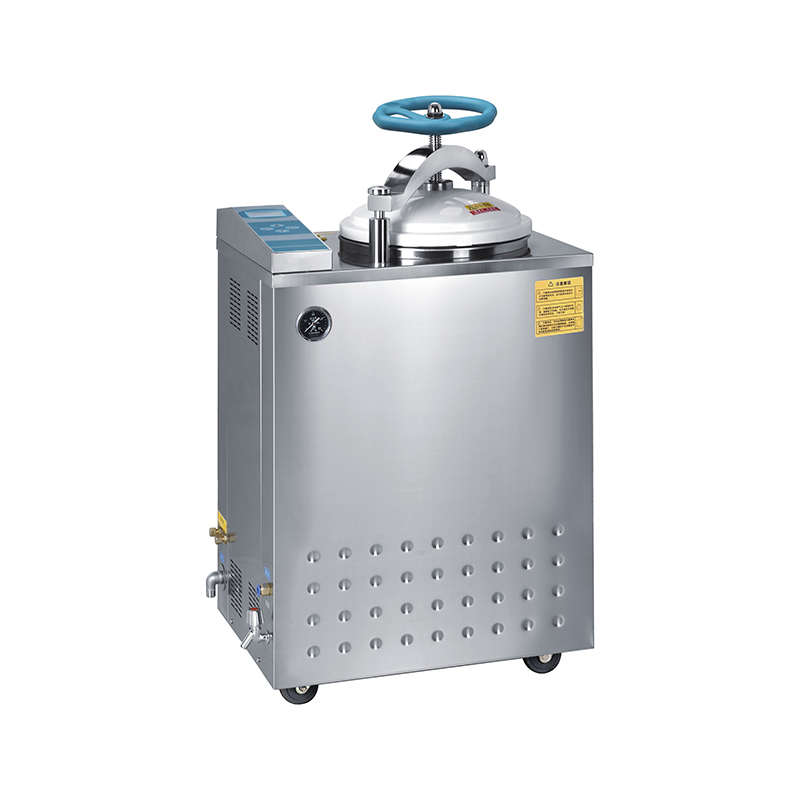
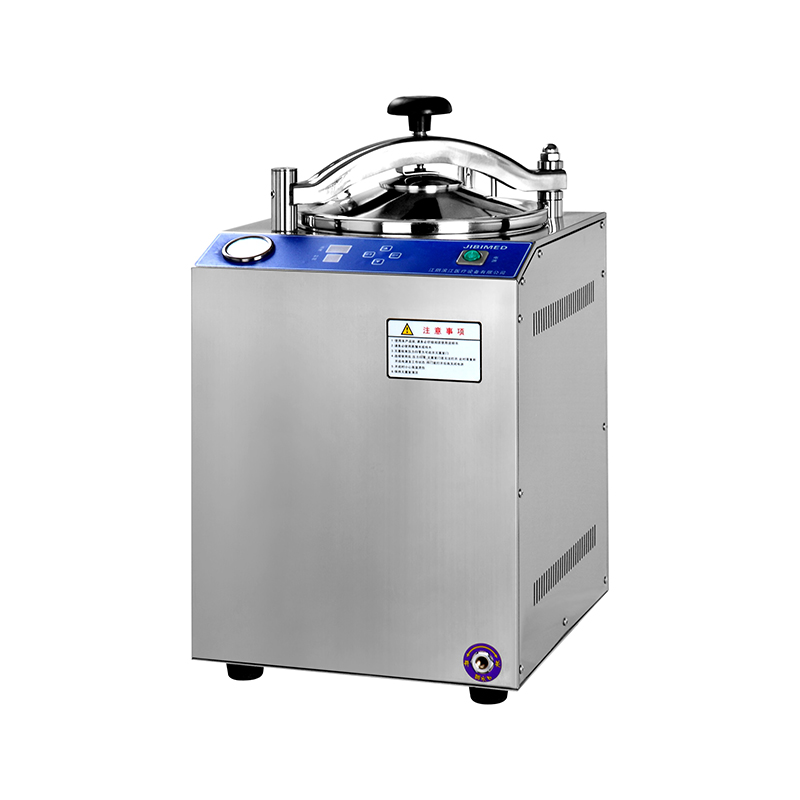
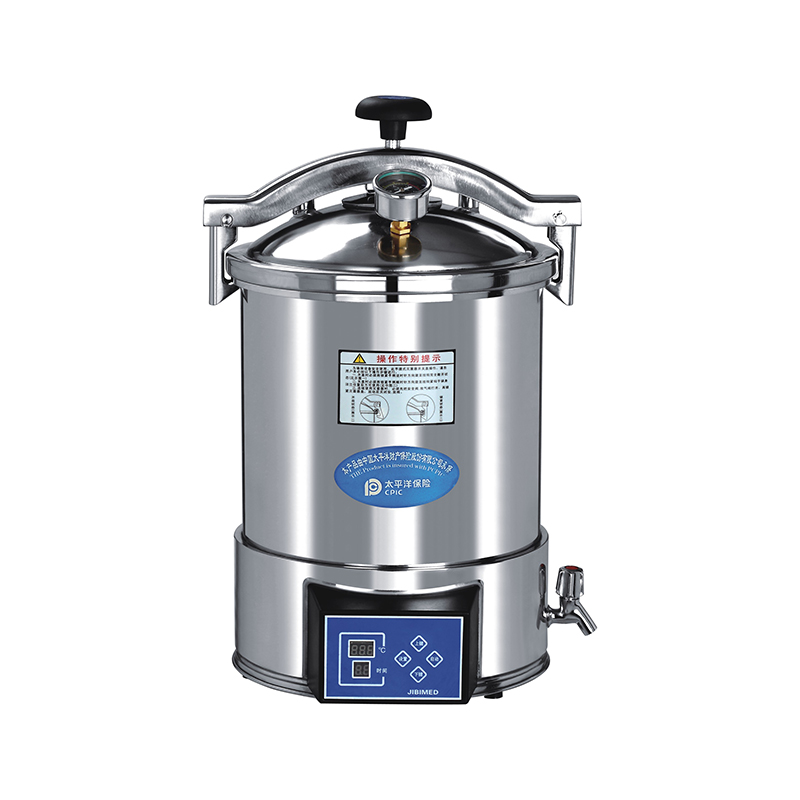
A small steam sterilizer refers to a pressure steam sterilizer with a chamber volume not exceeding 60 L.
02 Evaluating Sterilization Efficacy of Pressure Steam Sterilizers
A pressure steam sterilizer should be tested after installation and before being put into use, after replacing the HEPA filter or repairing internal components, and during annual maintenance testing. The test items should include at least: sterilization efficacy testing, B-D testing (small steam sterilizers usually do not need this), pressure gauge and safety valve calibration, and temperature/pressure sensor calibration (if necessary).
Routine monitoring of small steam sterilizers is divided into two types: biological monitoring and chemical monitoring.
03 Biological Monitoring
Type B cycle: applies to cycles sterilizing packaged or unpackaged loads (solid loads, hollow loads, porous loads, etc.). Place the biological indicator at the center of the item pack that is hardest to sterilize, then place that pack at the hardest-to-sterilize location in the sterilizer. After one sterilization cycle, remove the biological indicator, incubate it, and observe the color change.
Type N cycle: used only for cycles sterilizing unpackaged solid loads. A self-contained biological indicator should preferably be used, placed at the hardest-to-sterilize location in the sterilizer. If a spore strip is used instead, it should be packaged in a sterilization-specific paper-plastic pouch before being placed at the hardest-to-sterilize location. After one sterilization cycle, remove the biological indicator, incubate it, and observe the color change. Self-contained biological indicators should be evaluated according to the product instructions; after incubating for the specified time, if the test group, positive control group, and negative control group all show the color change required by the product instructions, the sterilization cycle is qualified; otherwise it is unqualified.
Type S cycle: used for cycles sterilizing special loads specified by the manufacturer, including unpackaged solid loads plus at least one of the following: porous loads, small porous strip loads, hollow loads, single-wrapped items, and multi-layer wrapped loads. Depending on the load type, place the biological indicator in the corresponding load, then place it at the hardest-to-sterilize location in the sterilizer. After one sterilization cycle, remove the biological indicator, incubate it, and observe the color change.
04 Chemical Indicator Tape and Chemical Indicator Cards
Steps for chemical indicator tape monitoring:
- Apply the chemical indicator tape to the outside of the item pack to be sterilized, then place it inside the pressure steam sterilizer.
- Select the appropriate sterilization mode according to the type of item being sterilized.
- After sterilizing at 121°C for 20 minutes, observe whether the tape has changed color 100% (the striped pattern should show black diagonal stripes), indicating whether sterilization has occurred. After qualified sterilization, the indicator tape shows black stripes.
Evaluation criteria: if the chemical indicator tape shows the qualifying color change, it is qualified; if the color change does not meet the standard, it is unqualified, and the batch of sterilized items cannot be used. The items should be resterilized, retested, and the sterilizer inspected and repaired.
Steps for chemical indicator card (agent) monitoring:
Place a chemical indicator card at the center of each item pack to be sterilized; if there is no item pack, place it at the location in the sterilizer that is hardest to sterilize. After one sterilization cycle, remove the indicator card and observe the changes in its color and shape.
Evaluation criteria: if the chemical indicator cards all show the qualifying color change, the batch is qualified; if the color change does not meet the standard, it is unqualified, and the batch of sterilized items cannot be used. The items should be resterilized, retested, and the sterilizer inspected and repaired.
It should be noted that, in addition to confirming that the indicator turns the qualifying color when the required sterilization temperature and time are reached, it is also necessary to confirm that it does not turn the qualifying color when the required temperature and time are not reached.
Monitoring frequency: every batch.
05 B-D Test
The B-D test, also known as the Bowie-Dick test, is mainly used to test the air-removal effectiveness of pre-vacuum pressure steam sterilizers, and is an important measure for verifying whether a pre-vacuum pressure steam sterilizer is working properly.
Small steam sterilizers usually do not need to undergo the B-D test. If the B-D test is performed, it can be done as follows:
Under an empty-chamber condition, place the B-D test pack at the front bottom of the sterilizer, near the door and the exhaust port, with no other items in the chamber besides the test pack. After completing the B-D test cycle, remove the B-D test sheet and observe the color change.
If the color change is uniform (completely uniform), this indicates that cold-air removal is effective, and the test is qualified. If the B-D test sheet shows uneven color change, with a light-colored patch in the center, uneven white spots, or a uniform silver-gray sheen, this indicates a positive B-D test result. In this case, the cause of the B-D test failure should be investigated, and the sterilizer cannot be used again until it passes the B-D test.
The B-D testing cycle is generally determined based on the manufacturer's recommendations together with a risk assessment of the sterilizer, and should be tested at least once per year; some laboratories recommend testing at least once every 3 months (for pulsating-vacuum or pre-vacuum pressure steam sterilizers).
[Reposting Declaration]
The copyright belongs to the original author. We pay tribute to the original author! If a media or individual does not wish to have their content reprinted, they can contact us and we will immediately remove it! Thank you!
Küldjön el nekünk
Vegye fel velünk a kapcsolatot
+86-510-86270699
 Magánélet
The information provided on this website is intended for use only in countries and jurisdictions outside of the People's Republic of China.
Magánélet
The information provided on this website is intended for use only in countries and jurisdictions outside of the People's Republic of China.
 Adatvédelem